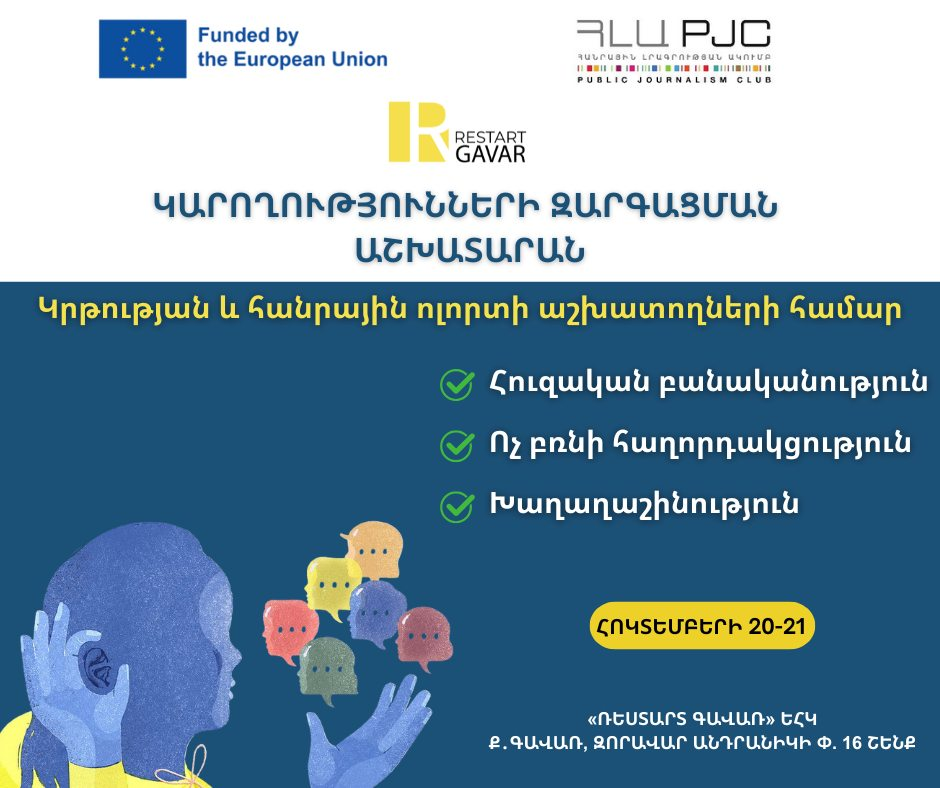

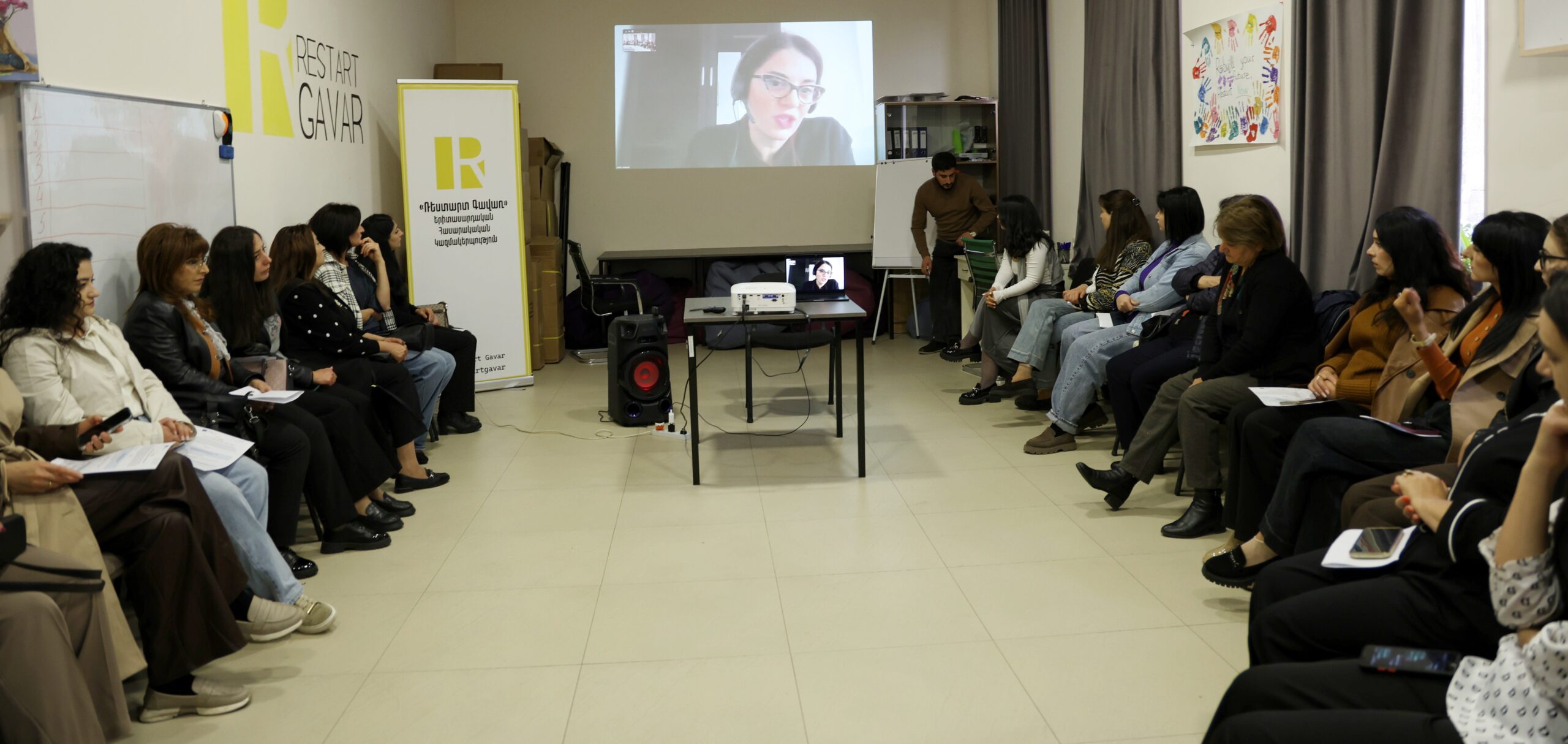
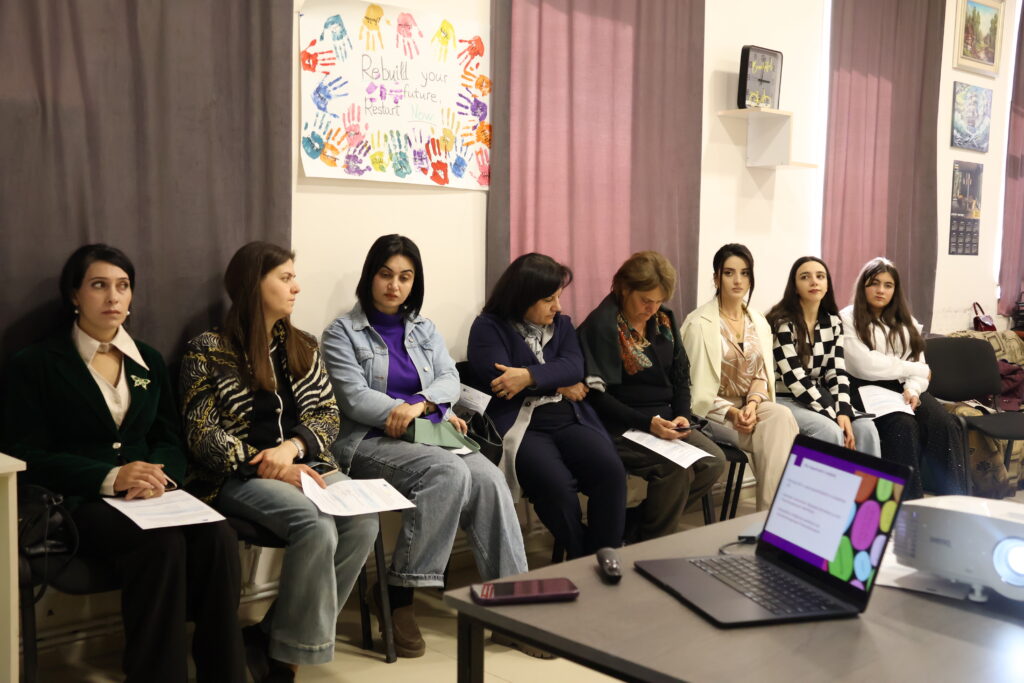
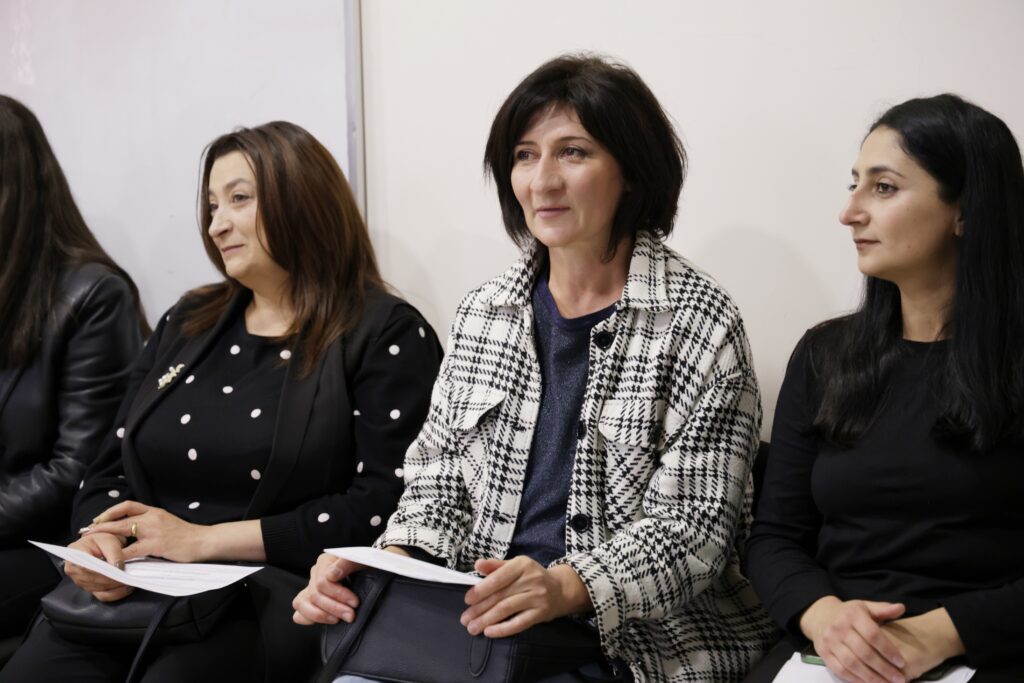
How can we talk about difficult issues in peaceful language? How can we resolve conflicts without becoming enemies? These and other topics related to peace-oriented communication were discussed by over 30 representatives of educational, cultural, and civil society organizations from the Gavar community.
The “Restart Gavar” Youth NGO organized a two-day capacity-building event in cooperation with the Public Journalism Club (PJC). Within the event, participants also took part in training sessions on emotional intelligence, conflict management, and nonviolent communication skills.
The project aimed to promote a culture of peace, foster social cohesion, and encourage the values of media responsibility and constructive communication.
On the first day, Gohar Hovhannisyan, a lawyer and communication specialist representing the Frontline Youth Network who has participated in several nonviolent communication (NVC) training programs organized by PJC, shared her experience. She spoke about the importance of the concept of nonviolent communication and its core elements: observation, feeling, need, and request using practical examples.
The purpose of the training was to help participants recognize their own and others’ feelings and needs, create a “safe” environment using nonviolent communication methods, and transform conflicts into opportunities for cooperation.
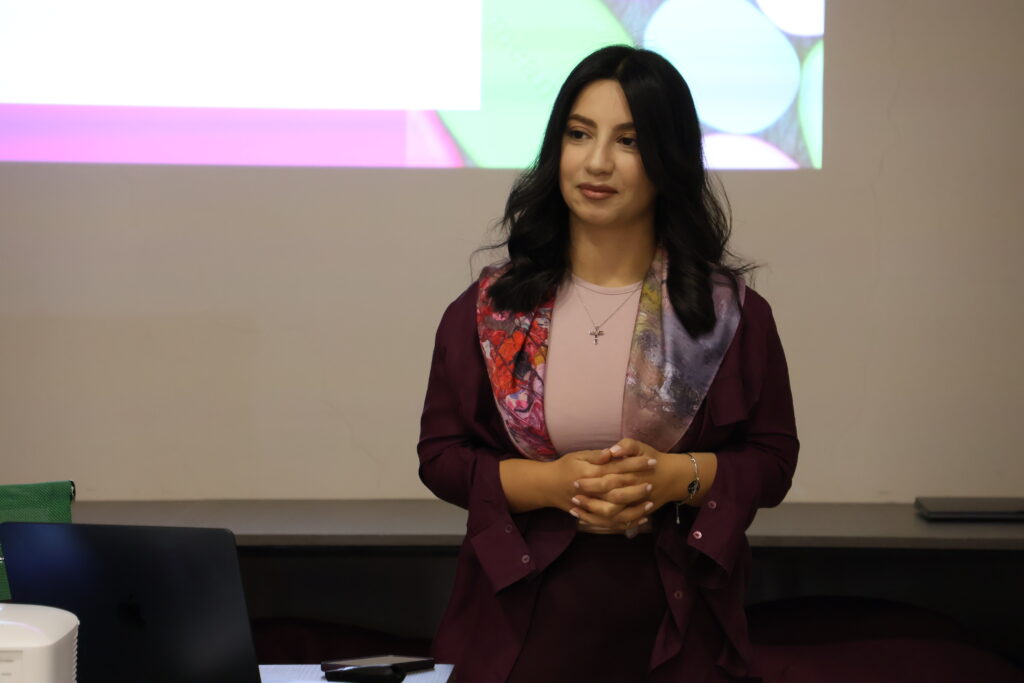
“During PJC’s trainings, I deepened my NVC skills, developing the ability to build conscious, compassionate, and effective dialogue. This approach helps to ease conflicts both in professional and community settings. I have shared what I learned with others, showing how to shift the tone of conversation from accusation toward clear expression of needs and feelings, fostering mutual understanding. In our sessions, we analyzed real situations and practiced each stage of nonviolent communication from recognizing emotions to formulating specific requests,” said Gohar Hovhannisyan.
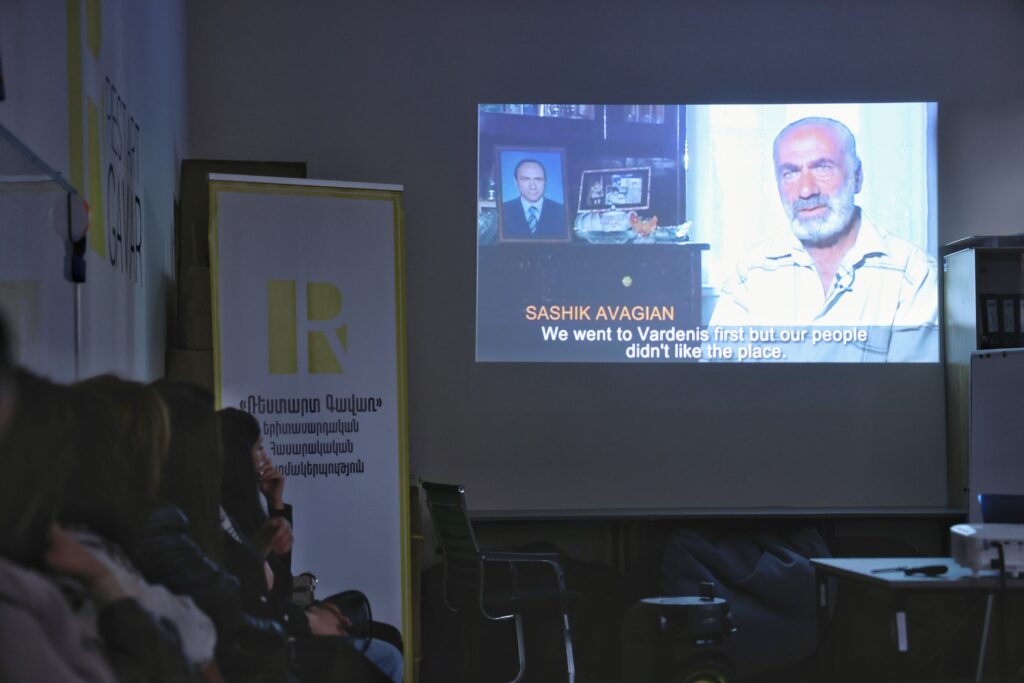
On the second day, participants watched the documentary film “From Home to Home”, presented by the film’s author and Public Journalism Club director Seda Muradyan. The film reflects ideas of mutual understanding and peacebuilding. It tells the story of Armenians who moved from Azerbaijan to Armenia and Azerbaijanis who moved from Armenia to Azerbaijan in 1989, amid rising tensions before the Nagorno-Karabakh war. The families exchanged their villages and promised not to destroy the graves left behind. After the screening, a meaningful discussion followed.
In the second part of the meeting, Hakob Karapetyan, Projects Manager at the Yerevan Press Club, journalist, and media expert, came up with a speech. In recent years, his work has focused on developing quality media in Armenia, fact-checking mechanisms, media ethics standards, and communication culture aimed at peacebuilding. He discussed the importance of peace-oriented initiatives and effective approaches to civic dialogue.
Hakob Karapetyan also presented the results of a study titled “Civic (Track 2) Diplomacy between Armenia and Azerbaijan: a Historical Overview and Future Prospects”. The research was based on interviews, analysis of public materials, and information provided by experts from the Yerevan Press Club.
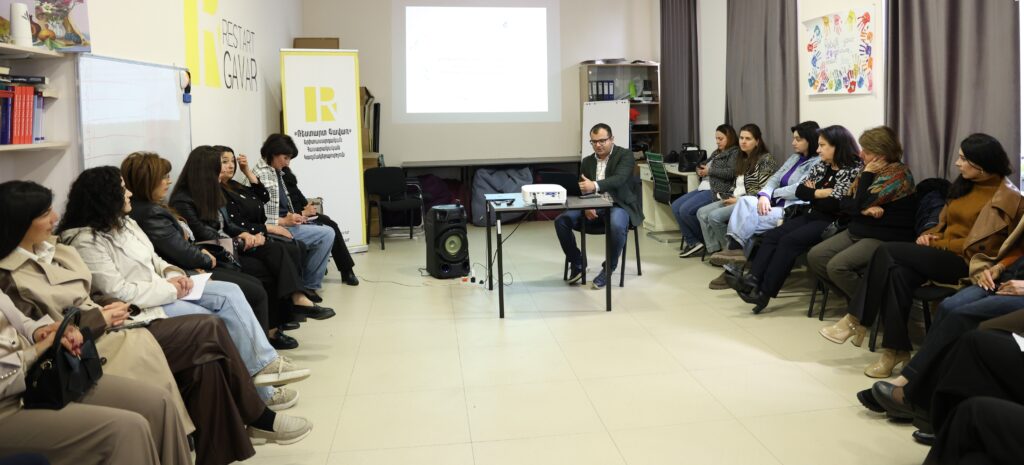
The study explored the most effective and promising fields of Armenian-Azerbaijani Track 2 diplomacy, according to respondents, as well as existing obstacles such as political tensions, nationalist sentiments, limited civil society engagement, and the imitation of peacebuilding efforts. It also included recommendations aimed at rethinking civil diplomacy, expanding participatory platforms, fostering critical thinking, and promoting international cooperation.
The event concluded with a Q&A session and summary discussion, during which participants highly appreciated the initiative and emphasized its practical significance for community work.
Participants noted that such meetings help people realize that peace begins with everyday communication in families, workplaces, and communities. According to them, the film and discussion helped them understand that peace is not just an idea but a process, one in which everyone can contribute.
Narek Arevshatyan, president of “Restart Gavar” Youth NGO, highlighted that such meetings and discussions not only enhance participants’ communication and emotional skills but also contribute to building stable and peaceful communication at both interpersonal and intercommunity levels.
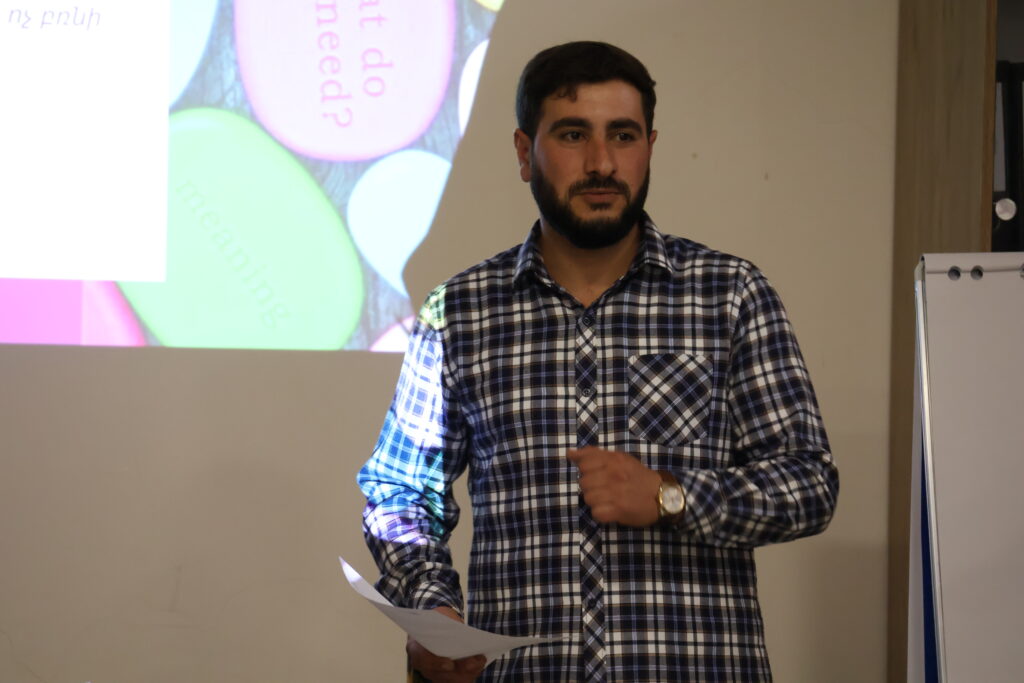
“A culture of peace begins with dialogue based on listening, understanding, and trust. When people learn not to fear speaking, but also to listen, that is already the most important step toward peace,” he emphasized.
Participants added that the initiative gave them new motivation to continue joint work on spreading a culture of peace and strengthening constructive communication in the Gavar community.
The event was held within the framework of a project implemented by “Restart Gavar” Youth NGO under the “Professional Media, Practitioners and Grassroots Joining Forces for Dialogue” project.
The “Professional Media, Practitioners and Grassroots Joining Forces for Dialogue” project is implemented by the Public Journalism Club with the financial support of the European Commission.