
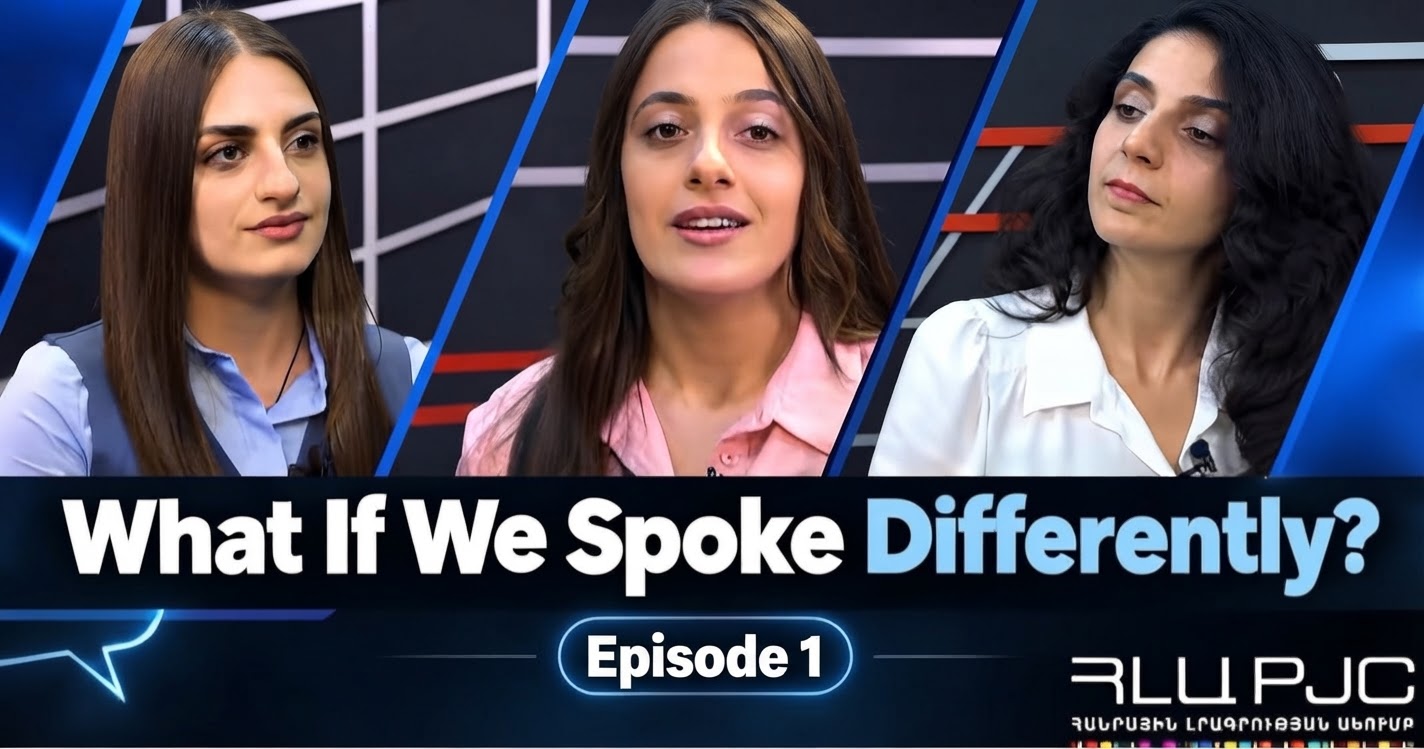
How do we speak when we are angry? How do we talk about what matters to us without blaming others? And is it possible to listen to someone when we deeply disagree with what they are saying?
These are some of the questions explored in the first episode of the podcast “What If We Spoke Differently?”, which focuses on the core principles of Nonviolent Communication (NVC) and their application to peacebuilding.
NVC is often perceived as a method for communicating more calmly or politely in personal relationships. In reality, it offers a much deeper approach: understanding what is happening within ourselves and in our relationships, distinguishing facts from evaluations, recognizing our own feelings and needs, and expressing as clearly as possible what we want to say or ask for.
NVC does not suggest avoiding conflict. Nor does it require us to give up our position or agree with the other person. The question is different: Can we express disagreement without it turning into humiliation, insult, or hostility?
When Anger Does Not Become Blame
During difficult conversations, our first reaction is often to blame.
- “You never listen to me.”
- “You always do the same thing.”
- “You don’t care.”
Behind such statements there may be real pain, anger, or frustration. But the other person often hears the judgment directed at them first and becomes defensive.
NVC encourages us to pause for a moment and ask ourselves: What am I actually feeling, and what is important to me in this situation? Behind anger, there may be a need for respect, safety, fairness, or to be heard.
Recognizing that need does not mean giving up our demands. It helps us express them more clearly, without creating additional tension.
Listening to Understand
During conflict, we often listen not to understand, but to respond. While the other person is speaking, we may already be preparing our counterargument. NVC suggests another way of listening: trying to understand not only the words, but also the feelings and needs behind them. This is especially important in environments where people’s experiences, memories, or positions may differ sharply.
Listening does not mean agreeing.
Empathy does not mean justifying something we find unacceptable. But if every attempt to understand the other person is perceived as giving up our own position, the possibility of dialogue can quickly disappear.
NVC and Peacebuilding
Peacebuilding is not only about negotiations or formal agreements. It is also about a culture of communication.
- How do we speak to people we disagree with?
- How do we respond to hurtful words?
- How do we express our anger?
- And can we protect our boundaries and values without dehumanizing the other person?
NVC does not, by itself, resolve conflicts or eliminate deep disagreements. But it can help create a communication environment in which it is possible to have conversations about difficult issues in the first place.
It is in this sense that changing the way we communicate can also become part of peacebuilding. A culture of peace is shaped not only through major political processes, but also through our everyday communication — in our families, workplaces, on social media, and in public discussions.
The first episode of the podcast explores how the principles of NVC can be applied in precisely these situations — during difficult conversations.
What if we spoke differently?
Read, share, and become a force for positive change
The podcast was produced by the Public Journalism Club within the framework of the “Bridge – Relationship Building and Inclusive Dialogue Based on Genuine Compassion” program