
Hate speech and social tension in Armenia have reached a dangerous threshold. Therefore, in the context of building more stable and peaceful relationships—both at the interpersonal level and between communities—the approaches and principles of Nonviolent Communication (NVC) are becoming increasingly important.
Nonviolent Communication is a globally recognized methodology of respectful, needs-based communication that helps strengthen trust, mutual understanding, and a culture of responsible speech in interpersonal and group relations. The dissemination of NVC is an important tool both for strengthening internal social cohesion and for improving the quality of peacebuilding efforts and public debate.
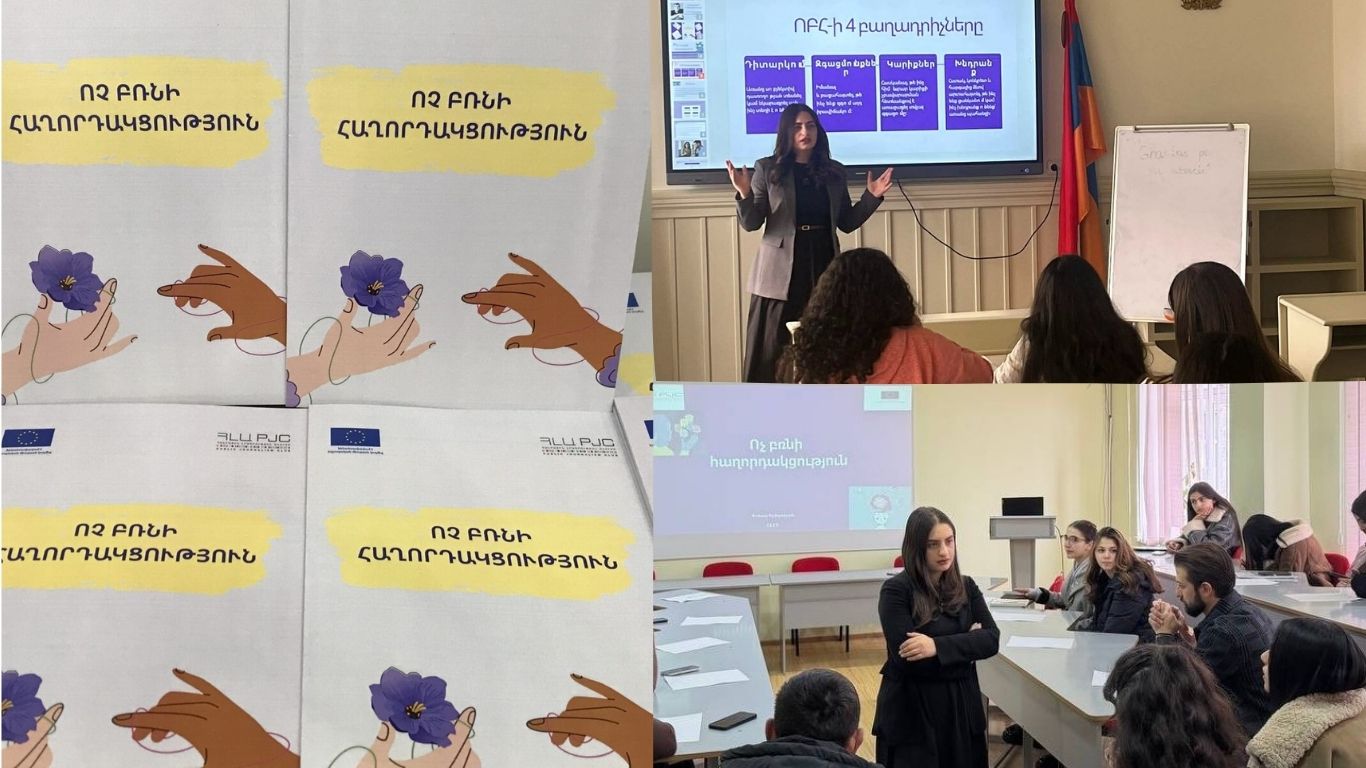
In recent years, the Public Journalism Club (PJC) has been actively working to promote and strengthen NVC culture in Armenia. Most recently, it published the first Armenian-language practical guide on NVC within the framework of the program “Professional Media and Civil Society Join Forces for Dialogue.” The program is implemented by the Public Journalism Club with funding from the European Commission and in partnership with International Alert.
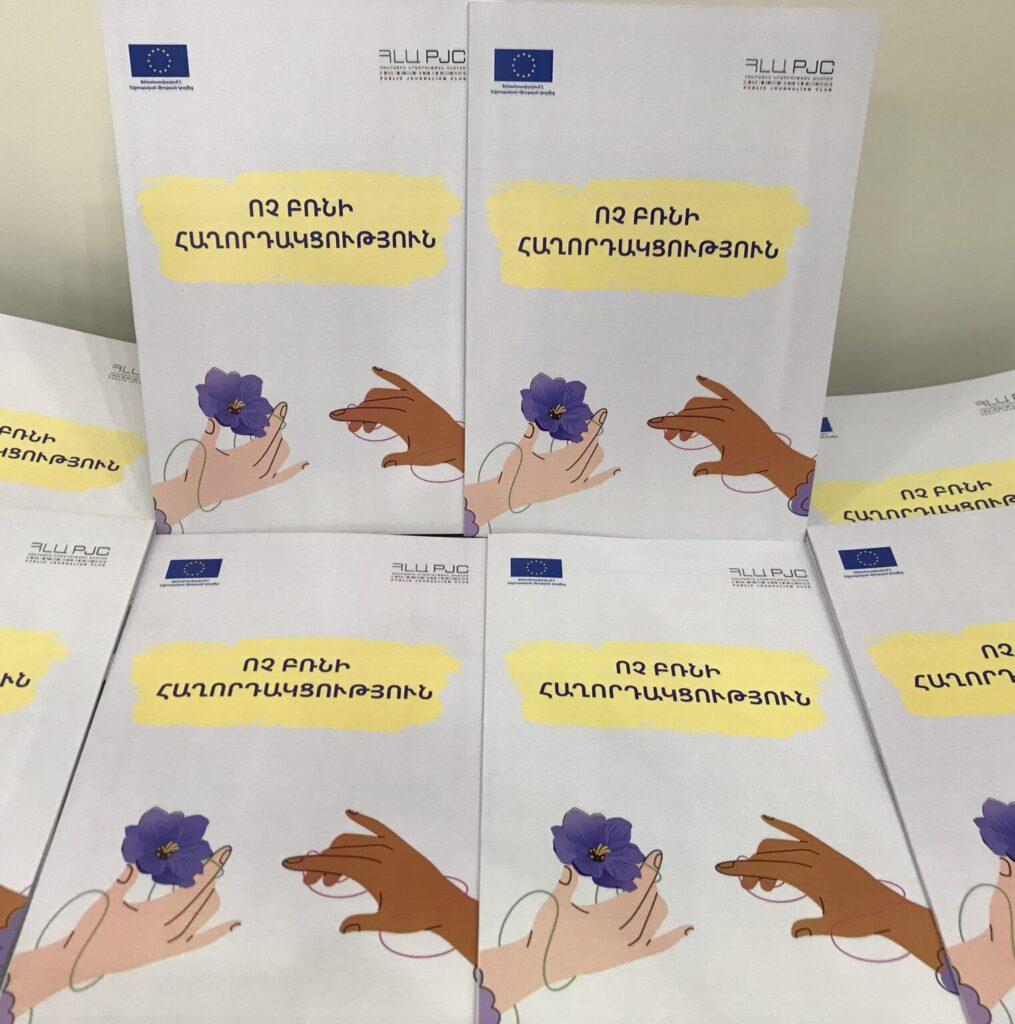
“In social media, we often ‘win’ arguments in the comments section but lose relationships. Recently, hate speech and online aggression have reached dangerous levels, normalizing labeling, humiliation, and divisive lines. Hate speech divides people, and division makes us more vulnerable—both in terms of internal social cohesion and our country’s stability. Nonviolent Communication helps transform the culture of speech by returning dialogue to a space of listening, understanding, and responsible expression—without humiliating, threatening, or causing harm,” notes Seda Muradyan, President of the Public Journalism Club.
The author of the booklet is program beneficiary and partner Gohar Grigoryan, who was inspired during the development of the idea by her participation in NVC capacity-building trainings conducted by the Public Journalism Club, as well as by Marshall Rosenberg’s book “Nonviolent Communication: A Language of Life.”
The booklet’s practical content, examples, and exercises were reviewed and refined under the mentorship of internationally certified NVC expert Cinta Depondt, ensuring methodological accuracy and alignment with international standards.
The goal of the booklet is to present tools for peaceful and constructive communication in personal and interpersonal relationships, as well as in public, civic, and international contexts. It includes developed examples, practical exercises, and guidance to help readers understand how to speak about sensitive topics, prevent the escalation of tension, listen without judgment, and express their needs and concerns without offense or aggression.
“The dissemination of NVC culture in Armenia is very important to me, as it is particularly applicable in countries with high levels of social tension and hate speech—such as, unfortunately, Armenia. NVC can help our society create a healthy environment for dialogue, free from accusations, self-blame, and insults. If there is a ‘prescription’ that can heal our society, then one of its medicines, in my view, is Nonviolent Communication. I hope this booklet will serve that purpose and another important goal—peacebuilding—by creating platforms of mutual understanding and dialogue for countries in the region. NVC is an excellent tool for overcoming conflicts and resolving them peacefully, both at the individual and public levels,” emphasizes the guide’s author, Gohar Grigoryan.
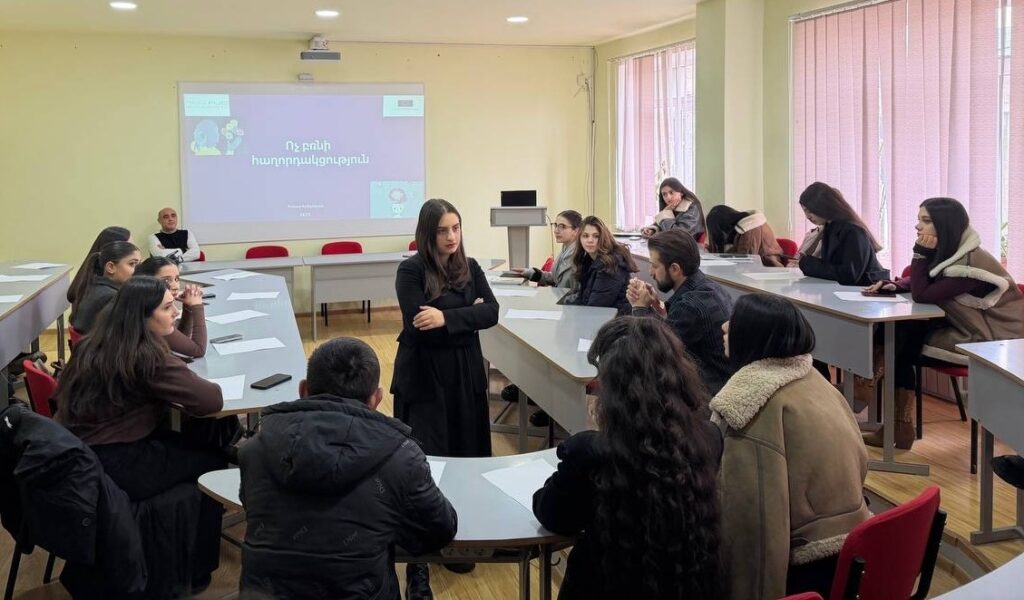
The guide has already generated significant interest in academic circles. During presentations held at Yerevan State University and Shirak State University, students not only became familiar with the booklet but also practiced constructive dialogue skills through interactive exercises with Gohar Grigoryan, presenting real-life situations and sharing their own experiences. Discussions with students also addressed how the NVC approach can be useful in peacebuilding initiatives and contribute to reducing tensions between societies.
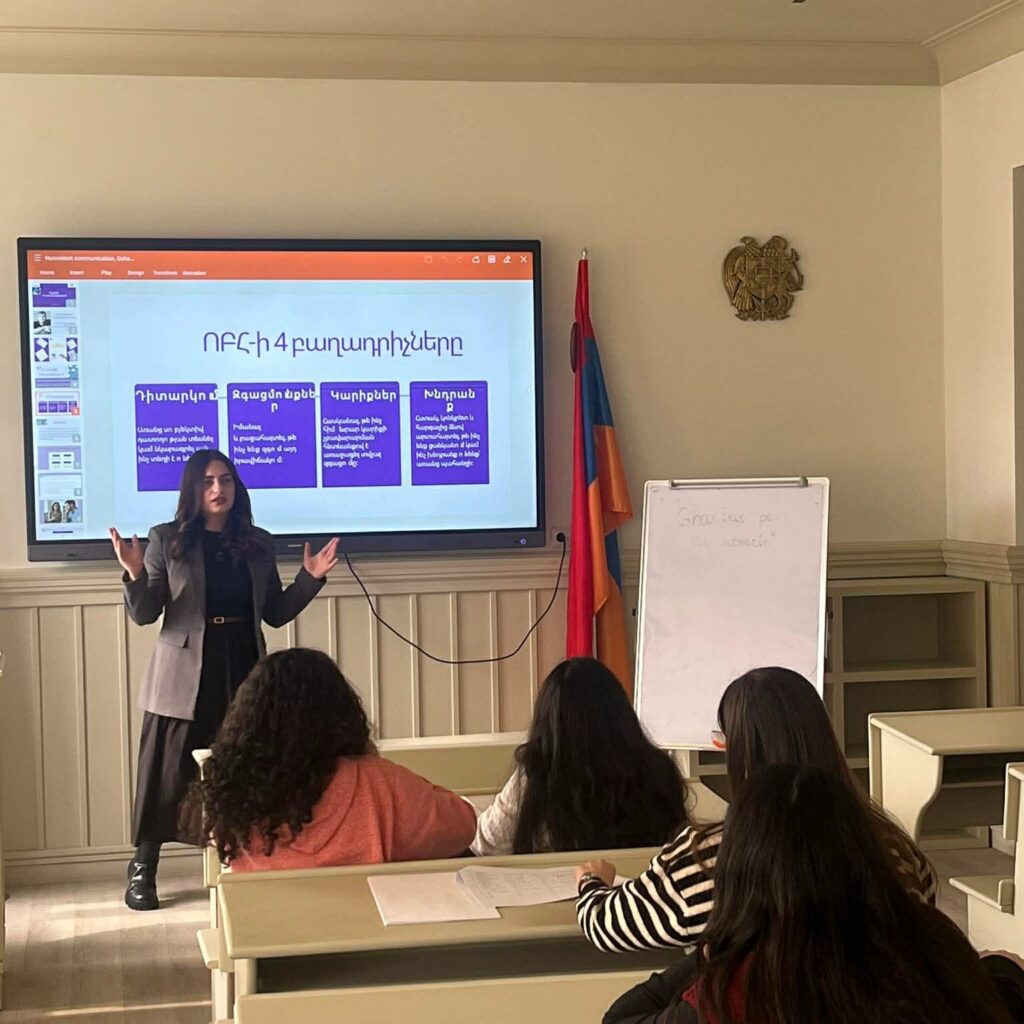
“The interest and enthusiasm shown by young students during the presentations of the NVC booklet at Yerevan State University and Shirak State University once again highlighted the relevance of the topic and the importance of actively engaging young people. This is also a clear imperative to continue the dissemination and popularization of literature dedicated to Nonviolent Communication,” the author stresses.
The guide can be downloaded from the Public Journalism Club’s website via the provided link.
It should also be noted that, at the initiative of the Public Journalism Club, A1+ recently conducted an interview with Cinta Depondt, discussing NVC as a needs-based approach that makes life “more beautiful.”