
What can Nonviolent Communication (NVC) change, and what can it not replace? How can we talk about pain and disagreement without hurting others? These are the questions explored in the fourth episode of the “What If We Spoke Differently?” podcast.
Host Sofi Mkrtchyan discusses these issues with nonviolent communication specialists Gohar Grigoryan and Margarita Khudaverdyan.
Peace is not only about political decisions and negotiations; it is also shaped by our everyday interactions. Our words and attitudes can foster mutual understanding or deepen hostility. However, the entire responsibility for peace cannot be placed on individuals: the state and public institutions have their own obligations to protect human rights and ensure justice.
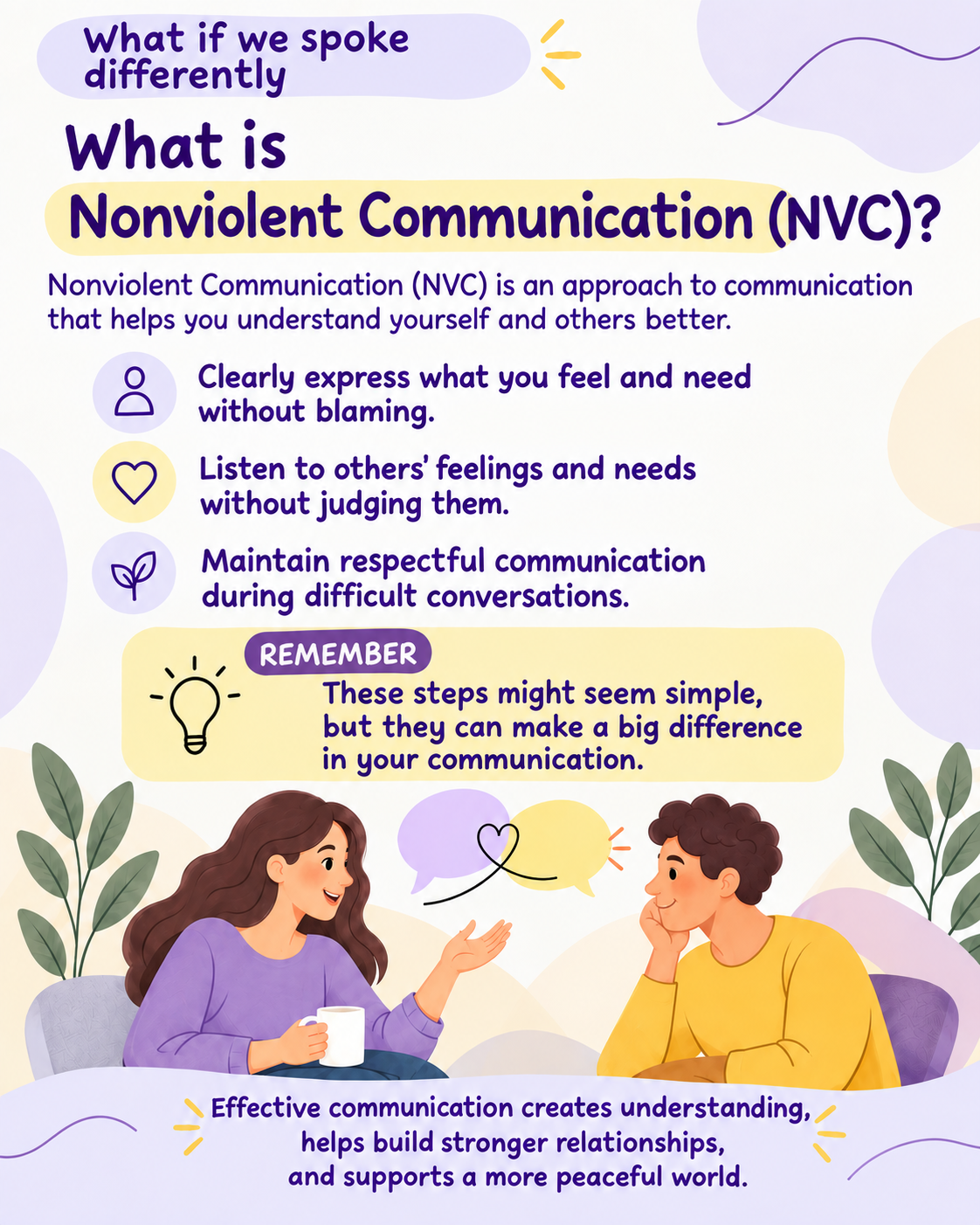
Nonviolent Communication does not solve political problems or replace justice. It can create space for dialogue where people can talk about their feelings and needs while respecting one another’s boundaries. It is not a way to conceal problems behind pleasant words, but an attempt to address them through facts and without dehumanizing others.
A safe environment is also essential for dialogue: people must be able to speak without fear or pressure. The media and politicians, too, have a responsibility for the language they use, as labeling and hate speech can reinforce stereotypes.
In our everyday lives, we can start with small steps: distinguishing facts from opinions, resisting the urge to react immediately, and exploring the feelings or needs behind another person’s words. Sometimes, it is also important to take a pause to better understand our own feelings and needs.
In the fourth episode of the podcast, Sofi Mkrtchyan, Gohar Grigoryan, and Margarita Khudaverdyan discuss the possibilities and limitations of Nonviolent Communication, as well as its role in peacebuilding.
The podcast was produced by the Public Journalism Club within the framework of the “Bridge – Relationship Building and Inclusive Dialogue Based on Genuine Compassion” program in partnership with International Alert and LIVKOM. The program is funded by the New Democracy Fund.